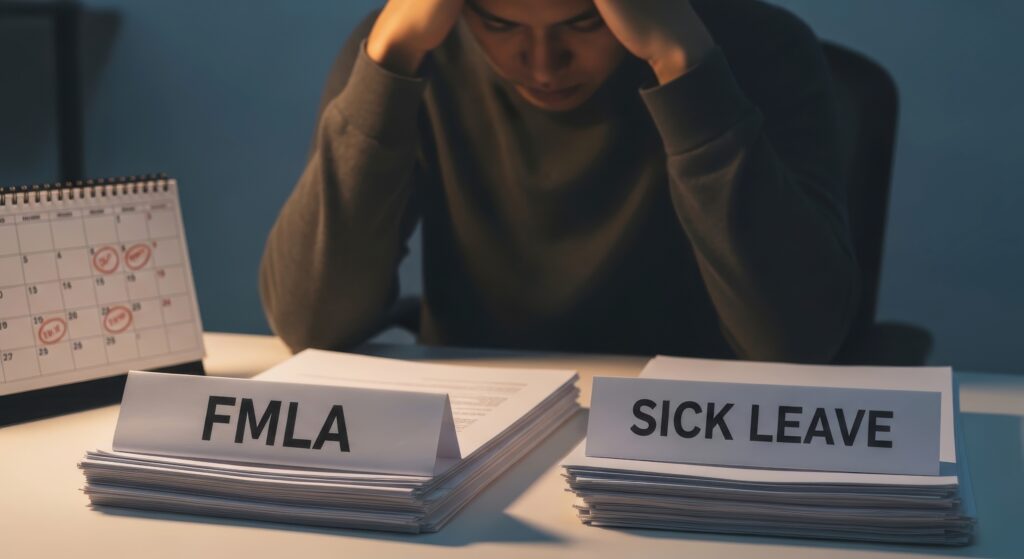
Florida FMLA Rehab Leave and Addiction Treatment Rights
Florida FMLA rehab protections provide the legal foundation you need to take time off for substance use treatment. Don’t let worries about your position, health coverage, or reputation hold you back from getting the help you need.
As long as a qualified healthcare provider recommends treatment and you meet the eligibility requirements, the Family and Medical Leave Act (FMLA) may offer job-protected leave so you can focus on recovery without putting your career at unnecessary risk.
You may be surprised to learn that substance use disorders can qualify for federal FMLA protections.
When treatment is medically necessary, and a licensed healthcare provider has documented the need for care, FMLA may give you the legal right to step away from work without losing your job.
Since Florida doesn’t have its own statewide paid leave program, FMLA serves as the primary protection available to most professionals seeking Florida substance abuse treatment leave. While this means leave is generally unpaid at the state level, the job protection and health insurance continuity that FMLA provides can make a meaningful difference when you’re weighing whether treatment is even possible for you.
When your healthcare provider recommends treatment, Florida FMLA rehab leave may apply to several levels of care, such as:
How FMLA Leave for Addiction Treatment in Florida Actually Works
It can be hard to know where to start when you’re trying to understand FMLA leave for addiction treatment in Florida, especially when you’re carrying the weight of everything else.
The most important thing to know first is that FMLA is a federal protection, which means it applies consistently whether you’re based in Miami, Orlando, Tampa, or anywhere else across the state.
Secondly, Florida doesn’t operate its own separate paid leave program for medical treatment, so most professionals rely on FMLA when substance abuse treatment requires time away from work. When your healthcare provider determines that treatment is clinically necessary, those federal protections may be what allow you to get the care you need while your job waits for your return.
Do Florida Rehab Leave Protections Apply to Your Situation?
Knowing whether Florida rehab leave protections apply to you is an important first step.
To qualify for FMLA leave for addiction treatment in Florida, you generally need to meet the following requirements:
At least 12 months of employment with your current employer (not necessarily consecutive)
A minimum of 1,250 hours worked in the year preceding your leave request
Employment at a location where your company has 50 or more employees within a 75-mile radius
When these conditions are satisfied, Florida substance abuse treatment leave may offer several meaningful protections, including:
Up to 12 weeks of job-protected leave within any given year
Continued access to your group health insurance throughout the duration of your leave
The right to return to your position or one that is comparable once treatment is complete
For professionals who have spent months or years telling themselves that they can’t afford to step away, understanding that Florida FMLA rehab protections may already be available can be genuinely life-changing.
What Are Your Addiction Treatment Leave Options in Florida?
While Florida doesn’t have a statewide paid leave program, that doesn’t mean employer-provided support is off the table.
Beyond Florida FMLA rehab protections, your organization may offer additional resources that provide financial or logistical support during treatment, such as:
Medical leave programs established directly through your employer
Disability coverage that may offset a portion of lost income during your time away
Supplemental health benefits that go beyond your standard plan
Employee assistance programs or internal wellness resources
Reviewing your company policy and having an honest conversation with your human resources department is often the most practical way to understand the full picture of what may be available to you.
Finding Your Way Forward with Florida FMLA Rehab Leave
Deciding to pursue treatment takes courage. Once you make that decision, requesting Florida FMLA rehab leave follows a series of manageable steps that your employer and healthcare provider can help you navigate.
Step 1: Speak Honestly with Your Doctor
Everything begins with an honest conversation with a qualified healthcare professional. Your doctor can assess what level of treatment is appropriate for your situation and prepare the clinical documentation needed to support your leave request under FMLA.
Step 2: Bring Your Documentation to HR
Once your treatment has been clinically recommended, your human resources department will walk you through the federal FMLA paperwork process. This typically requires a certification completed by your healthcare provider confirming that a serious health condition requires time away from work for treatment.
Step 3: Review Your Eligibility and Establish a Timeline
After your employer receives and reviews your documentation, they will confirm whether Florida FMLA rehab protections apply to your circumstances and work with you to determine the timing and scope of your approved leave.
Step 4: Begin Treatment and Give Recovery Your Full Attention
With your leave confirmed and your protections in place, you can enter treatment with a strong level of job protection in place. That peace of mind can make a real difference in your ability to fully engage with recovery.
What Leaving Florida for Treatment Can Offer You
There’s something about proximity to your everyday life that can quietly undermine recovery before it even begins. When your office, your colleagues, and your daily obligations are never more than a phone call away, it becomes genuinely difficult to create the internal distance that healing requires.
Choosing to pursue treatment outside of Florida gives you something that local programs often cannot provide: the freedom to focus entirely on yourself without the weight of professional visibility or familiar triggers pulling at your attention.
Programs built specifically for professionals offer deeply personalized care, a higher level of confidentiality, and residential environments designed around your comfort and long-term recovery.
Our Locations
San Clemente, California
Del Campo House
Known For
Ocean Views
Private Rooms
Beach Accessibility
Key Amenities
Grass Yard for Dogs
Ocean View Workspace
Pool Table
How to get there:
Just 2 minutes off Highway 5, and less than 20 minutes away from Orange County Airport
What Sets Ocean Ridge Apart for Florida Residents in Recovery
When treatment is built around the realities of your life, recovery becomes something you can truly commit to. Ocean Ridge was designed for professionals who need a setting that honors both the seriousness of their situation and the complexity of their lives.
Residential Treatment
On-site living provides consistent clinical support, structure, and focused attention.
EAP and Working Professionals Treatment
We understand employer assistance programs and workplace leave processes.
Executive Rehab Program
Our programs offer structured care designed for professionals with leadership responsibilities.
Pet-Friendly Accommodations
Pets are welcome and can provide comfort and stability during treatment.
Phone and Laptop Friendly
Stay connected when necessary while keeping recovery the priority.
Evidence-Based and Holistic Therapies
Our treatment approach combines science-backed therapy modalities with holistic practices like yoga and breathwork.
You Don’t Have to Navigate This Alone
Understanding your Florida FMLA rehab options while also facing the reality of needing treatment can feel overwhelming. At Ocean Ridge, we’re here to help you understand what protections may apply, explore your options, and take the next step with clarity and confidence.
Contact us today, and we’ll help make the process simple.
FAQs About Florida FMLA Rehab and Substance Abuse Treatment Leave
How does Florida FMLA rehab coverage apply to addiction treatment?
Florida FMLA rehab protections may apply when a licensed healthcare provider recommends treatment for a substance use disorder that qualifies as a serious health condition. Leave may be available for detox, residential rehab, outpatient care, or therapy when medically necessary.
Does Florida have its own paid leave program for substance abuse treatment?
Florida doesn’t currently operate a statewide paid family and medical leave program. Most professionals rely on federal FMLA protections, sometimes supplemented by employer-provided benefits.
How much time can you take for Florida substance abuse treatment leave?
Under FMLA protections, eligible employees may take up to 12 weeks of job-protected leave within a 12-month period. The duration of your approved leave will depend on your treatment plan and provider recommendations.
What does your employer actually find out about your rehab leave?
Your employer receives documentation confirming a qualifying medical need for leave, while specific details about your treatment are handled confidentially through healthcare providers and HR.
What happens to your job after addiction treatment leave in Florida?
When Florida FMLA rehab protections apply, and you continue to meet FMLA requirements, your employer is generally required to restore you to the same or an equivalent position with similar pay and benefits.
Health Insurance Companies That We Work With
CALL 24/7 (888) 897-1978, We’re here to help you get the information you need.
In addition to the providers above, we also work with CIGNA, and most major PPO providers.